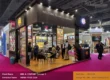

A crowded trade show floor gives brands only a few seconds to earn attention. Visitors are surrounded by screens, graphics, demonstrations and competing sales pitches, which means an attractive stand alone is no longer enough. Modern exhibition booth design needs to do something more valuable: guide the right people from curiosity to conversation and, ultimately, conversion.
The strongest booths aren’t necessarily the biggest or the loudest. They are the ones that make it easy for visitors to understand the brand, interact with its products and take the next step.
For exhibitors, that requires a shift in thinking. Instead of asking, “How do we make our booth look impressive?”, ask, “What do we want a visitor to do once they see us?”
That single question can change the entire design.
1. Start Exhibition Booth Design With the Conversion Goal
Before discussing colours, materials or lighting, define what success looks like.
Are you trying to generate qualified sales leads? Launch a new product? Arrange meetings with existing customers? Demonstrate technology? Build awareness in a new market?
Your exhibition booth design should be built backwards from that objective.
For example, a machinery company may need a demonstration-led environment where technical conversations happen around the product. A technology brand may need interactive screens and live demos. A premium real estate or lifestyle brand might benefit from a hospitality-driven space with comfortable meeting areas.
This is where an experienced exhibition booth designer adds value. The designer isn’t simply deciding what the booth should look like; they are planning how people will behave inside it.
Design becomes a business tool rather than decoration.
2. Think About the Three-Second Decision
Imagine walking through a busy exhibition hall.
You aren’t reading every headline or studying every booth. You’re scanning.
Visitors do exactly the same.
Effective exhibition stall design therefore needs a strong visual hierarchy that answers three questions quickly:
Who are you?
What do you do?
Why should I stop?
Large-format branding, a strong focal point and concise messaging can often achieve more than walls covered with product information.
Avoid trying to explain the entire company from the aisle.
The job of your exhibition booth design isn’t to complete the sales pitch from ten metres away. It is to create enough interest for the visitor to come closer.
Once they step inside, the experience can do the rest.
3. Use Exhibition Stall Design to Create a Visitor Journey
One of the biggest differences between an ordinary booth and a conversion-focused booth is flow.
Good exhibition stall design anticipates how a visitor moves through the space.
Think of the stand as a simple funnel:
Attract → Engage → Explain → Converse → Capture
The front of the booth should create visibility and curiosity. The middle can introduce products, demonstrations or interactive content. Deeper inside, quieter areas can support meaningful sales conversations.
Your exhibition stall designer should also consider aisle direction, open sides, neighbouring booths, entrances, product placement and sightlines.
A beautiful reception counter positioned in the wrong place can unintentionally become a barrier. Likewise, too much furniture can make an otherwise large stand feel inaccessible.
Every element needs a purpose.
4. Custom Exhibition Booth Design Beats the Template Mindset
A financial services company and an industrial equipment manufacturer shouldn’t have booths that feel interchangeable.
Yet that happens surprisingly often.
Custom exhibition booth design starts with the brand rather than a predetermined structure. Architecture, materials, lighting, graphics and technology are developed around the company’s identity and exhibition objective.
This doesn’t mean adding logos to every available surface.
Often, sophisticated branding is more restrained.
Distinctive architectural forms, material choices, product displays or spatial experiences can communicate brand personality far more effectively than repetitive graphics.
Strategic exhibition booth design should make visitors recognise the character of the brand even before they read every message.
That’s what turns a temporary structure into a memorable brand environment.
5. Use 3D Exhibition Booth Design to Plan Before You Build
One of the most valuable stages happens before fabrication begins.
A detailed 3D exhibition booth design allows teams to visualise the proposed space, review proportions, understand visitor circulation and identify potential problems before materials reach the workshop.
But renders shouldn’t exist purely to impress stakeholders.
Use them as a decision-making tool.
Look carefully at the 3D exhibition booth design from the visitor’s perspective. Can you see the brand from the main aisle? Are important products visible? Is the reception desk blocking entry? Does the meeting space have enough privacy? Are screens positioned at natural viewing heights?
The closer the design thinking is to real-world execution, the fewer surprises you encounter on-site.
At Woodpeckers Global, we believe the final booth should remain true to the design intent—not become a compromised version of the approved render.
6. Design Engagement Into the Booth
People remember what they participate in.
That’s why modern exhibition booth design increasingly incorporates experiences rather than relying entirely on static graphics.
Depending on the brand, this could include live product demonstrations, interactive displays, digital configurators, touchscreens, physical product trials or guided storytelling.
Technology, however, shouldn’t be added simply because it looks futuristic.
A giant LED wall playing a corporate film on loop may attract attention, but does it create a conversation?
Every interactive element should have a clear role.
The best exhibition booth designer will ask what happens after someone interacts with the installation.
Does it lead naturally to a product discussion? Can a salesperson step into the conversation? Is there an opportunity to capture information?
Engagement without progression can produce crowds without producing leads.
7. Exhibition Booth Construction Should Follow the Design Intent
A great concept can still fail during execution.
Materials change. Details disappear. Lighting gets compromised. Finishes don’t match the render.
That’s why exhibition booth construction should never be treated as an entirely separate stage from design.
Designers, technical teams and fabricators need to understand how the approved concept translates into a physical structure.
This includes structural stability, electrical planning, lighting, AV integration, finishes, graphics, storage and venue compliance.
Strong exhibition booth construction is often invisible to visitors—and that’s exactly the point. Doors align, graphics sit correctly, surfaces are finished cleanly and lighting falls where it was intended.
The visitor simply experiences a polished space.
Behind that simplicity is detailed planning.
8. Make Lead Capture Part of Exhibition Booth Design
One of the most overlooked elements of exhibition booth design is what happens when someone shows genuine interest.
Where does the conversation happen?
How is their information recorded?
What distinguishes a serious prospect from someone collecting brochures?
Instead of placing a generic enquiry form on a tablet, integrate lead capture into the visitor journey.
A product demonstration could end with a consultation. An interactive experience might lead to a personalised recommendation. A QR code could provide access to technical specifications or a catalogue in exchange for contact information.
Your sales team should also have clearly defined spaces for different conversations.
Quick enquiries can happen near the front. Qualified prospects may need semi-private meeting areas deeper inside the stand.
The physical environment should support the sales process rather than interrupt it.
9. Choose an Exhibition Stall Designer Who Understands Execution
A compelling concept is only half the job.
Your exhibition stall designer needs to understand materials, fabrication and venue realities.
Ask practical questions during the design process:
Can this detail actually be fabricated cleanly?
How will the structure be transported?
Where will electrical wiring run?
How will graphics align across panels?
How quickly can maintenance access be provided if something goes wrong during the show?
This practical thinking separates a beautiful presentation from an executable exhibition booth design.
Working with integrated teams also reduces the disconnect that can occur when one agency designs the booth and an unrelated contractor interprets it later.
10. Consider Turnkey Exhibition Booth Design Services
Exhibitions involve multiple moving parts: concept development, technical drawings, fabrication, branding, electrical work, AV, logistics, installation and on-site coordination.
Managing each vendor separately can create gaps in accountability.
Turnkey exhibition booth design services bring these functions together under a more integrated delivery model.
For exhibitors managing multiple shows, cities or complex builds, this can make execution considerably more streamlined.
A single team handling exhibition booth design and execution also understands the original intent behind every element, reducing the chances of last-minute interpretation on the show floor.
At Woodpeckers Global, our approach combines design, technical detailing, fabrication and on-ground execution to deliver bespoke exhibition environments from concept to completion.
11. Don’t Design for Footfall Alone—Design for Qualified Leads
A packed booth photographs well.
It doesn’t necessarily mean the exhibition was successful.
Modern exhibition booth design should focus on attracting the right visitors rather than everyone walking through the hall.
Clear messaging can act as the first filter. Product-specific experiences can qualify interest further. Well-trained sales teams can then identify genuine opportunities.
After the event, measure more than total leads.
Look at qualified leads, meaningful meetings, product enquiries, follow-up opportunities and eventual conversions.
Then connect those results back to the stand.
Which display attracted serious prospects? Where did conversations happen most naturally? Which interactive feature performed well? Was there a part of the booth visitors ignored?
Those insights should inform the next exhibition booth design.
Build a Booth That Works as Hard as Your Sales Team
Trade shows bring an unusual concentration of customers, competitors and decision-makers into one physical environment. The opportunity is enormous—but so is the competition for attention.
Successful exhibition booth design brings strategy, creativity and execution together.
It catches attention without creating clutter. It communicates without overwhelming. It encourages interaction without relying on gimmicks. Most importantly, it creates a natural path from the aisle to a meaningful business conversation.
With more than two decades of experience and 5,500+ brands served, Woodpeckers Global creates bespoke exhibition environments backed by integrated design and execution capabilities.
From custom exhibition booth design and detailed visualisation to exhibition booth construction and on-ground delivery, we build spaces designed not simply to be seen—but to perform.
Ready to Turn Your Next Booth Into a Lead-Generating Space?
Partner with Woodpeckers Global for turnkey exhibition booth design services that bring design, fabrication and execution together under one roof.
CTA: Start Your Exhibition Booth Project